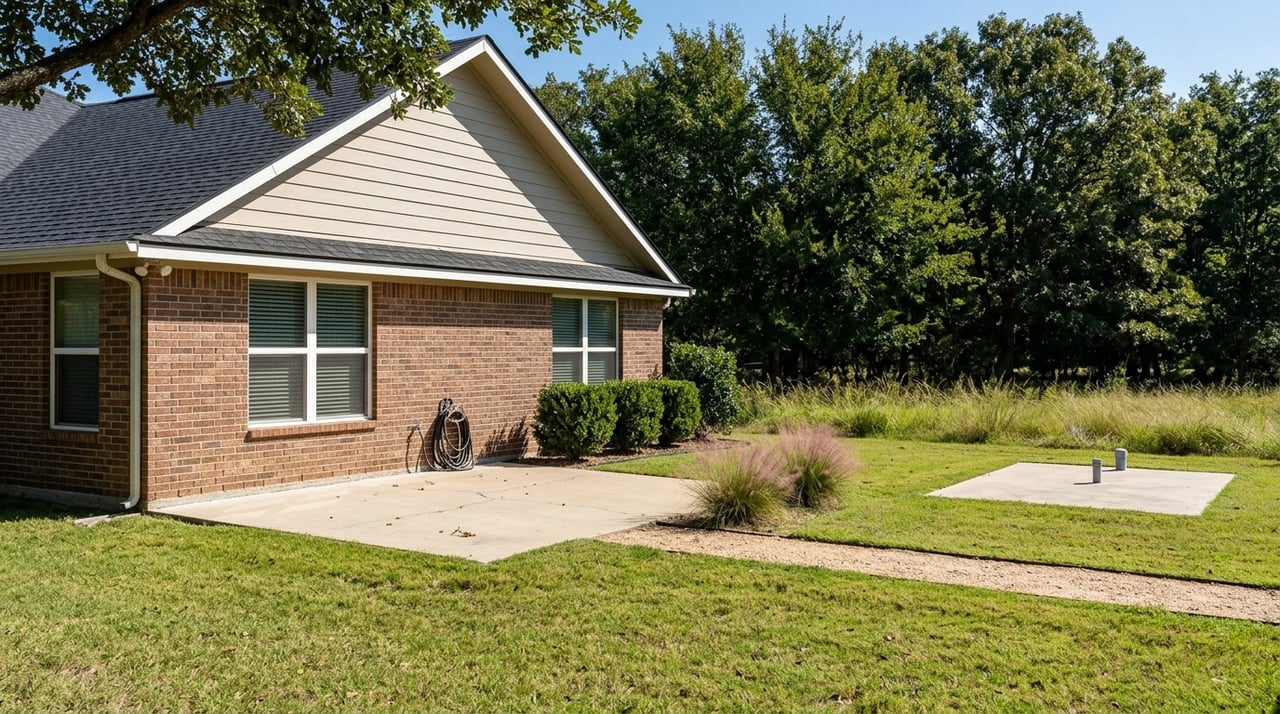
How to Shop Smart for Goliad Homes With Land
April 9, 2026
April 9, 2026
Thinking about buying a home with a little more elbow room near Goliad? Extra land can give you flexibility, privacy, and room to grow, but it also adds a few layers of due diligence that you do not want to overlook. If you know what to check before you buy, you can move forward with more confidence and avoid costly surprises later. Let’s dive in.
When you buy a property near Goliad, you are not just evaluating the house. You are also evaluating utilities, access, drainage, boundaries, and what the land can legally support over time. In many cases, those land-related details matter just as much as the condition of the home.
A key first step is knowing whether the property is inside the City of Goliad or outside city limits. That single detail affects how you should think about water, sewer, permits, zoning, septic, road maintenance, and future changes like annexation or utility service expansion.
If a property is inside the city, you are generally dealing with city services and city rules. The City of Goliad Utilities Department handles water, sewer, and garbage service, and the same city resources point buyers toward permitting and zoning information.
That can make some parts of ownership more straightforward. You still need to verify that utilities are active and confirm any permit requirements for future work, especially if you plan to build, expand, or make major updates to the property.
Once you move outside the city, the due diligence list changes. County subdivision standards become more important, along with questions about private wells, on-site sewage systems, private roads, and how the property is accessed and maintained.
According to Goliad County subdivision regulations, lots intended for an individual well and individual on-site sewage system must have a minimum lot size of two acres and 150 feet of paved street frontage. Lots with central water service may be as small as one acre under those county guidelines.
This city-versus-county distinction can affect both your current plans and your future costs. The Texas Real Estate Commission notice for property outside city limits warns that property may later fall within a municipality’s extraterritorial jurisdiction or be annexed, and it also advises buyers to check whether the parcel is in a certificated water or sewer service area.
In plain terms, rural living can offer more acreage and flexibility, but it often comes with more homework. Before you fall in love with the space, make sure the practical details work too.
For an in-town property, start with the basics. Ask whether water, sewer, and garbage service are already in place, whether there are any billing or deposit issues to clear up, and whether the current setup fully serves the home and any outbuildings.
The City of Goliad utility page confirms that these services are handled through the city and billed monthly. That makes verification fairly simple, but you still want clarity before closing.
If the property uses a private well, water quality becomes your responsibility. The EPA notes that private wells are not regulated under the Safe Drinking Water Act, and the owner is responsible for maintaining safe drinking water.
The CDC recommends testing private well water at least once a year for total coliform bacteria, nitrates, total dissolved solids, and pH through a state-certified laboratory. For a buyer, that makes a well-water test an important part of the purchase process, not an afterthought.
If a home is on septic, ask for the full paper trail. Goliad County’s septic permitting process requires site evaluation, county review before construction, and inspection before the system is covered.
That means you should ask for permit documents, inspection history, service records, and any repair or maintenance information. A system may be working today, but records help you understand its age, condition, and whether anything has already been flagged.
Land can change how a property performs during heavy rain, so drainage deserves close attention. A beautiful lot can still have low spots, runoff issues, or limitations tied to floodplain rules.
The official place to check flood-hazard information is FEMA’s Flood Map Service Center. In addition, the city’s zoning ordinance includes a floodplain overlay district, which can affect what may be built or stored in those mapped areas.
County rules also matter here. Goliad County subdivision regulations state that stormwater runoff from development may not be released onto adjacent property or county drainage facilities at a greater rate than when the property was undeveloped.
When you tour a property, ask practical questions such as:
With acreage or larger lots, fences, gates, and driveways can create a false sense of certainty. What looks like the boundary may not match the legal boundary at all.
The TREC survey and title guidance makes clear that the survey should be prepared by a registered professional land surveyor acceptable to the title company and lender, and buyers may object to defects, exceptions, or encumbrances shown on the survey or title commitment.
Access is just as important as acreage. If the property is served by a private road or shared drive, ask who maintains it, whether there is a written maintenance agreement, and whether emergency access is preserved.
Under Goliad County subdivision rules, the county does not assume maintenance of a private road unless that road has been dedicated and certified to county standards. Until then, maintenance remains with the owner or subdivision association.
A survey is only part of the picture. You also want to understand any easements, shared-drive agreements, access limitations, or other title exceptions that could affect how you use the property.
TREC also advises buyers to have the abstract reviewed by an attorney or obtain a title policy. For home-plus-land properties, that extra review can be especially helpful when the layout, access, or improvements are not simple.
One of the biggest advantages of buying extra land is flexibility. You may be thinking about a barn, additional storage, livestock, another structure, or simply holding the land for future use.
That is why it is smart to ask early what the property can realistically support. City zoning, floodplain rules, access limitations, utility constraints, and county regulations can all shape what is possible later.
If agricultural or open-space use is part of your long-term plan, the Texas Comptroller’s guidance on productivity appraisal is worth reviewing. Eligible land may be appraised based on productivity value rather than market value, but land inside an incorporated city has additional eligibility requirements.
The same guidance also notes that changing land from agricultural use to another use can trigger rollback tax. In other words, tax assumptions should always be verified before you rely on them in your budget.
A home with land often needs more than a standard home inspection. The house still needs a professional review, but the land systems may require separate specialists and separate records.
The Texas Real Estate Commission’s consumer guidance explains that buyers should use a TREC-licensed inspector for a standard residential inspection. For properties with rural features, that is usually just one piece of the puzzle.
A smart due-diligence checklist may include:
That combination gives you a much clearer picture of the full property, not just the home’s interior and roofline.
If you want a practical way to shop smart near Goliad, keep this shortlist handy:
Buying a home with land near Goliad is often a tradeoff between simplicity and space. In-town properties may offer easier utility access and clearer permitting paths, while rural properties may offer more acreage but require deeper review of water, wastewater, drainage, access, and long-term flexibility.
The good news is that you do not have to sort through all of that alone. When you ask the right questions early, you put yourself in a much stronger position to choose a property that truly fits your goals. If you are exploring home-plus-land options near Goliad, The Orr Group is here to help you evaluate the details, compare your options, and move forward with confidence.
Stay up to date on the latest real estate trends.
We believe in using technology to build and foster relationships within our community. We offer years of experience combined with an unwavering commitment to our clients and their real estate needs.