The Foundation Disclosure Box in Victoria County Doesn't Ask the Right Question
August 13, 2026
August 13, 2026
Which house is the safer buy: the one where the seller checked "yes, foundation repaired in 2019, engineer's report attached," or the one where that box says "no"?
Most buyers touring homes in Victoria County pick the second one without thinking twice. A clean "no" feels like a clean house. But on the soil under most of this county, that instinct gets the risk backward more often than it gets it right, and understanding why is the single most useful thing a buyer or seller here can know before the option period starts.
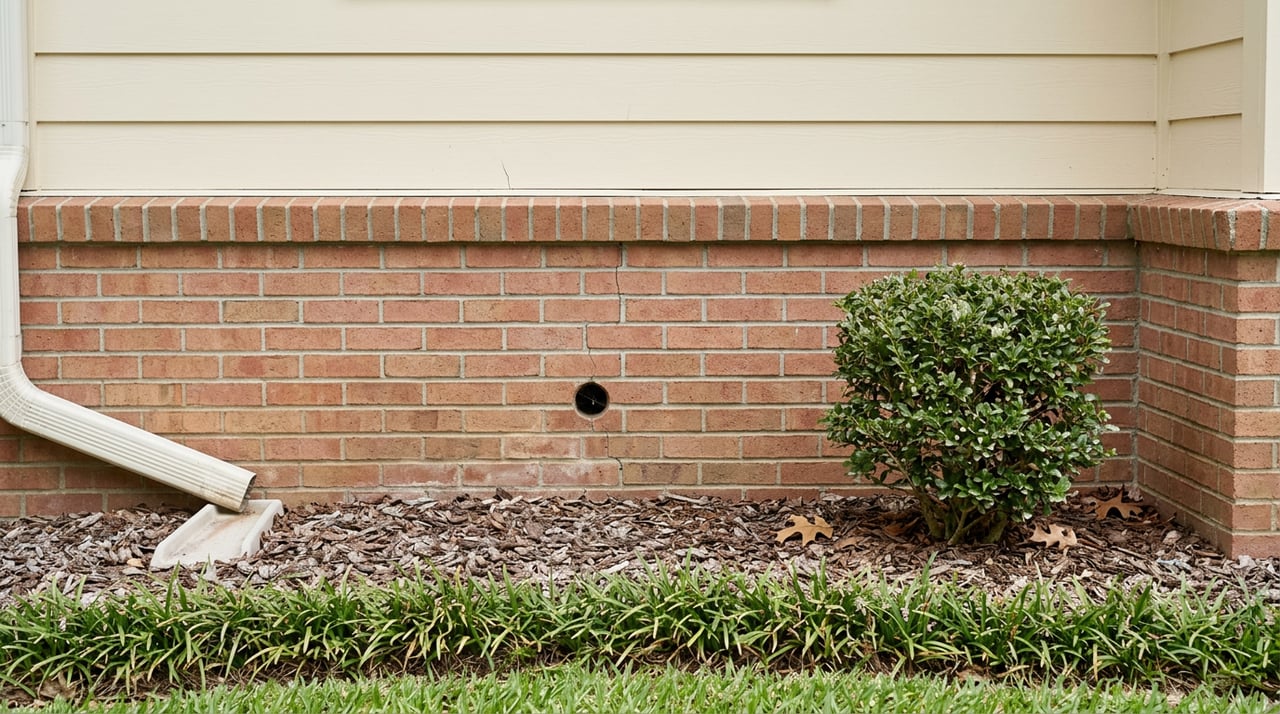
Victoria sits on the Gulf Coastal Plains, where the soil under most residential lots is heavy in expansive clay. That clay swells when it absorbs water and shrinks as it dries, and the resulting movement is the reason foundation repair companies list neighborhoods across the city, not just older pockets, as places they regularly work: Cimarron, Quail Creek, and lots near the Victoria Mall corridor all show up in local repair-company service descriptions as areas where homeowners see the familiar warning signs of soil movement, cracked walls, sticking doors, and uneven floors. One Victoria-based firm, Foundation Repair Victoria TX, describes serving the Golden Crescent region since 1978, which tells you this isn't a new problem or a rare one. It's a standing feature of owning a slab-on-grade home in this part of Texas.
That matters because most homes built here in the last several decades sit on concrete slabs, not pier and beam. A slab doesn't flex the way an elevated structure can. When the clay beneath one section swells while another section stays dry, the slab either cracks or gets forced out of level. Over a long enough ownership period, on this soil, some degree of movement isn't a possibility. It's closer to a certainty.
The reason to pay closer attention to this right now, rather than treating it as background trivia, is that 2026 has been an unusually active year for the swing that drives clay movement most: dry, then wet, in quick succession.
By mid-April 2026, Texas was sitting at roughly 77 percent statewide drought coverage, and the Coastal Bend specifically was flagged as a region to watch, with combined storage at Choke Canyon Reservoir and Lake Corpus Christi falling to about 8.7 percent, among the lowest levels ever recorded for those reservoirs. Then the pattern reversed. Texas A&M AgriLife Extension reported that by June 23, only 49 percent of the state remained in any level of drought, down from 99 percent on March 24, when 84.5 percent of the state was rated at moderate to exceptional drought. By late July, the region's rainfall had turned inconsistent again, alternating between localized storms and stretches of high heat that pulled moisture back out of the ground.
That kind of whiplash, dry soil pulling away from a foundation, followed by wet soil pushing back against it, is exactly the cycle that produces new cracks and reopens old ones. A home that showed no symptoms in 2024 or 2025 can show them for the first time this year, and a home with a documented repair from years ago is exactly the kind of property where that history is worth understanding rather than avoiding.
Texas law requires sellers of most residential properties to deliver a written Seller's Disclosure Notice, and the standard form asks a direct yes, no, or unknown question about previous foundation repairs. It is a useful legal requirement. It is a poor stand-in for due diligence.
Here's the gap. "Unknown" is a legitimate answer under Texas Property Code Section 5.008, and sellers who genuinely never noticed a hairline crack or a sticking door are allowed to mark it. But an unknown answer on a home built before, say, 2005, on soil that county-wide repair companies describe as routinely active, tells a buyer almost nothing about what an inspector will find. A "no" carries the same limitation. It reflects what the seller is aware of, not what a structural engineer would find on close inspection.
A documented "yes," by contrast, tells you three things at once: that a professional looked closely enough to diagnose a problem, that a specific company was hired to fix it, and that the work either did or didn't come with a transferable warranty. That's three pieces of verifiable information against zero. The seller's disclosure form itself is explicit that it isn't a substitute for an independent inspection, but the practical effect on this soil is that a disclosed repair often points a buyer toward more certainty, not less.
The stakes for sellers who get this wrong run further than a slower sale. A 2014 Eastland Court of Appeals ruling, Domel v. Birdwell, held that a seller's duty to disclose doesn't end the moment the form is signed. If new information surfaces that makes an earlier answer misleading, the seller is expected to update it. Buyers who later discover an undisclosed defect have two tracks available under Texas law, and both start counting from discovery rather than from closing. A claim under the Texas Deceptive Trade Practices Act must generally be filed within two years of discovery, while a common-law fraud claim over the same nondisclosure can extend that window to four years. On a matter as slow-moving and easy to miss at first as foundation settlement, that's meaningful exposure for a seller who marked "no" without checking.
Not every documented repair is equal, and this is where a buyer's homework actually earns its keep. The difference between a repair that reduces risk and one that just moves it down the road comes down to whether it produced a real file. In Victoria, that file typically comes from one of a handful of firms active in the area, companies like Hercules Foundation Repair, Groundworks, Rockin B Foundation, and Dawson Foundation Repair, alongside Foundation Repair Victoria TX. A complete file from any of them, or from a comparable licensed contractor, should include:
A seller holding all five of those documents isn't confessing to a problem. They're handing a buyer proof that the problem was found, addressed, and checked. A seller with none of them, sitting on a decades-old slab in a neighborhood where movement is common, is asking a buyer to take the soil's word for it instead.
For a buyer under contract in Victoria County, the option period is the window to turn this from a disclosure-form question into a documented answer. A few moves make the difference:
None of this requires assuming the worst about every seller in Victoria County. It requires treating the disclosure form for what it actually is: a starting point for a conversation, not the end of one.
Does a documented foundation repair lower a home's value in Victoria? Not automatically. A well-documented, professionally executed repair with a transferable warranty is often viewed by buyers and their agents as evidence of careful ownership, especially on this soil, where movement is common enough that its absence from a home's history is more surprising than its presence.
How do I find out which company repaired a home's foundation if the seller doesn't remember? The engineer's report and any permits pulled for the work typically list the contractor. If neither exists, that absence is itself useful information about how the repair was documented, or wasn't.
Is foundation movement covered by homeowners insurance in Texas? Most standard homeowner policies exclude soil-related foundation movement, which is part of why the documentation from a repair matters more than an insurance claim history would.
If you're weighing a purchase or a sale anywhere in Victoria County and want a straight read on what a specific property's disclosure and repair history actually mean for your offer, The Orr Group can walk through it with you line by line. Get Your Free Home Valuation and let's start with the facts on your address, not the general ones.
Stay up to date on the latest real estate trends.
We believe in using technology to build and foster relationships within our community. We offer years of experience combined with an unwavering commitment to our clients and their real estate needs.